TCM Summit: The Electoral Process Remains Highly Flawed – Alh. Umar Sanni
INTRODUCTORY REMARKS BY SPEAKERS
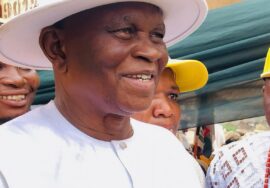
Alh. Umar Sani (Former Spokesperson to VP Namadi Sambo)
Alh. Umar Sani began by framing the summit’s theme within the broader context of Nigeria’s socio-political evolution since its independence. He emphasized that while Nigeria is technically independent, the country continues to depend heavily on foreign powers for economic and political support, indicating a lack of true sovereignty.
He delved into Nigeria’s post-independence electoral history, pointing to the flawed systems, the influence of regional politics, and military interventions. He reflected on the journey from Nigeria’s parliamentary system to the presidential system, which was borrowed from the United States. Alh. Sani emphasized that the integrity of elections has always been under question, and while reforms were attempted— such as the Justice Uwais Committee and subsequent reforms under President Jonathan’s government—the electoral process remains highly flawed.
He further argued that the quality of elections largely depends on the individuals appointed to oversee the process. He stressed that the Electoral Commission (INEC) must be independent and properly funded, as well as have a trained and professional staff. According to Sani, the issues of vote-buying and electoral manipulation are deeply rooted, but can only be eradicated if the people, politicians, and institutions work together to reform the system.
Nneka Smith (The People’s General)
Nneka Smith, known for her strong political commentary, pointed out the limitations of technology in addressing Nigeria’s electoral problems. While she acknowledged the benefits of technological tools like BVAS (Biometric Voter Accreditation System), she argued that they are not a panacea. According to Smith, the real issue lies in the mindset of the people. She recalled the 1993 elections, which were widely praised for their transparency due to the use of Option A4
system, and lamented the departure from such integrity in more recent elections.
Smith argued that reforms should focus on addressing the root of the problem: the people. She suggested that electoral education must begin at the grassroots level and be incorporated into school curricula to instill responsible citizenship and democratic values. She reiterated that even the most sophisticated technology could not remedy an electorate and leadership steeped in corruption and ignorance.
High Chief Franklin Ekechukwu (Founder, TCM)
High Chief Franklin Ekechukwu presented a broader perspective on Nigeria’s democratic challenges, linking electoral reforms to the need for genuine national development. Mr. Ekechukwu noted that Nigeria’s democratic index remains low, with a score of just 4.23, classifying the country as having a hybrid regime that faces significant challenges such as electoral fraud, a non-independent judiciary, and widespread corruption. He argued that the country has yet to develop a truly democratic culture, which is reflected in flawed elections and a lack of accountability.
He called for the decentralization of electoral processes, allowing citizens to take greater responsibility for the integrity of elections in their localities. Ekechukwu also mentioned that political parties should hold greater responsibility in ensuring that they field credible candidates. He emphasized the need for politicians to focus on serving the people rather than self-interest, and for the general populace to take ownership of their votes, even going so far as to suggest that communities should take up the mantle of protecting their votes.