Why The US Military Struck Sokoto (Northwest) Instead Of Nigeria’s North-East
Why the US Military Struck Sokoto (Northwest) Instead of Nigeria’s North-East
December 26, 202502
The United States military’s Christmas Day airstrike in Sokoto State, North-west Nigeria, has triggered widespread shock, confusion and speculation across the country and beyond.
For years, Nigeria’s insurgency narrative has been firmly associated with the North-East, particularly Borno, Yobe and Adamawa states — strongholds of Boko Haram and ISWAP.
So why did the US strike Sokoto, hundreds of kilometres away from the traditional terror epicentre?
Investigations and verified intelligence reports now provide a clearer picture — and the answer reveals a dangerous shift in Nigeria’s security landscape.
What Happened?
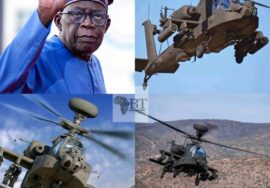
On December 25, 2025, the United States Africa Command (AFRICOM), in coordination with Nigerian authorities, carried out precision airstrikes targeting Islamic State-linked militants in Sokoto State.
The operation was later confirmed by US officials and Nigeria’s Ministry of Foreign Affairs, both of which described it as part of ongoing bilateral counter-terrorism cooperation. The strike reportedly neutralised multiple extremist fighters operating from remote locations near Nigeria’s north-western border.
Why Sokoto? The Verified Truth
1. ISIS Has Quietly Expanded Into North-West Nigeria
Contrary to popular belief, extremist violence in Nigeria is no longer confined to the North-East.
Security assessments show that Islamic State-affiliated cells — linked to the Islamic State Sahel Province — have quietly established operational bases in parts of North-West Nigeria, including Sokoto and neighbouring states.
These groups exploit:
Vast, under-governed rural terrain
Porous borders with Niger and the wider Sahel
Existing criminal and bandit networks
What initially appeared as “banditry” has, in some cases, evolved into ideologically driven extremist activity with international terror links.
2. Sokoto Sits on a Critical Sahel Terror Corridor
Sokoto’s strategic location makes it a gateway between Nigeria and the volatile Sahel region, stretching across Niger, Mali and Burkina Faso — areas heavily infiltrated by jihadist groups.
Intelligence reports indicate that extremist fighters use this corridor to:
Move weapons and logistics
Establish training camps
Evade pressure from regional militaries
This elevated Sokoto from a local security concern to a regional and international counter-terrorism priority.
3. Intelligence, Not Geography, Determined the Strike
Unlike Nigeria’s North-East — where Boko Haram and ISWAP are already heavily degraded and under constant military pressure — fresh, high-value intelligence reportedly identified confirmed Islamic State camps in Sokoto.
The US decision was therefore target-driven, not region-driven.
Security experts note that modern counter-terrorism operations follow where verified threats exist, not where public attention expects them to be.
4. Nigeria–US Security Cooperation Was Key
Despite conspiracy theories circulating online, the strike was not unilateral.
Nigeria’s government confirmed that the operation occurred within the framework of long-standing security cooperation with the United States, including:
Intelligence sharing
Surveillance coordination
Joint counter-terrorism assessments
This suggests Abuja was fully aware of the emerging threat in the North-West — even if it had not been widely disclosed to the public.
Why Not the North-East?
The North-East remains Nigeria’s most familiar terror theatre, but several factors explain why it was not targeted:
Boko Haram and ISWAP strongholds are already under sustained Nigerian military operations
US intelligence prioritised newly emerging ISIS expansion zones
Sokoto represented a preventive strike to stop the consolidation of extremist cells in shor
Copied