Nigeria Produces Oil; But Are Nigerians Getting The Economic Its Benefits? ~ Abiodun Adetula
12th of October, 2026
NIGERIA PRODUCES OIL. BUT ARE NIGERIANS GETTING THE ECONOMIC BENEFITS THEY SHOULD?
At the current petrol price of about ₦1,370 per litre, a Nigerian earning the ₦70,000 monthly minimum wage can buy approximately 51 litres of petrol with an entire month’s salary.
In Angola, the general minimum wage can buy approximately 333 litres.
In Algeria, it can buy approximately 510 litres.
All three countries PRODUCE CURDE OIL.
So why is the affordability picture so different?
And more importantly, why does a country with Nigeria’s petroleum resources still struggle to provide affordable and reliable energy to its people and businesses?
I have been examining the current arguments about whether petrol should cost ₦300, ₦500 or ₦1,370 per litre.
But I think we need to move beyond those figures and understand four important issues.
1. PETROL PRICE IS NOT THE SAME AS AFFORDABILITY
Nigeria’s statutory monthly minimum wage is ₦70,000, approximately US$53.
At ₦1,370 (US$1.03) per litre, 50 litres costs ₦68,500.
That is almost 98% of the entire monthly minimum wage, before food, rent, electricity, school fees or other expenses.
Now consider other oil producing countries, using petrol prices reported in early October 2026.
ANGOLA: Petrol costs 300 kwanzas (US$0.33) per litre. Its general minimum wage is 100,000 kwanzas (US$109) monthly, enough to buy approximately 333 litres. Certain smaller businesses have a lower wage floor.
ALGERIA: Petrol costs 47 dinars (US$0.35) per litre. Its minimum wage of 24,000 dinars (US$178) buys approximately 510 litres.
BRAZIL: Petrol costs 6.55 reais (US$1.26) per litre. Its minimum wage of 1,621 reais (US$312) buys approximately 247 litres.
So even though petrol costs more in Brazil than in Nigeria in dollar terms, someone earning Brazil’s minimum wage can purchase substantially more litres with a month’s pay.
These are statutory wage comparisons, not comparisons of average household incomes. They show the affordability burden at the wage floor, not what every worker earns or consumes.
In Kuwait, petrol costs approximately US$0.34 per litre, while Saudi Arabia sells 95-octane petrol for about US$0.62.
Both countries use government-administered domestic fuel prices and provide various benefits to eligible citizens.
But those low prices do not necessarily represent the actual economic cost of supplying petrol.
Government policy HELPS DETERMINE WHAT consumers pay.
And such policies have consequences.
Angola, for example, has been reforming its fuel subsidies because of their fiscal burden.
To cushion vulnerable households, it expanded its Kwenda cash transfer programme, providing eligible families 11,000 kwanzas (approximately US$12) monthly, paid quarterly. More than 1.5 million households had received payments by July 2026.
This illustrates an important principle.
Government can make petrol cheaper through policy, but IT MUST STILL ACCOUNT FOR THE COST and decide who should receive the benefits.
2. NIGERIA’S BIGGER PROBLEM IS OUR FORCED DEPENDENCE ON PETROL AND DIESEL.
I think we are concentrating too much on making petrol cheaper without confronting why Nigerians must consume so much fuel simply to live and work.
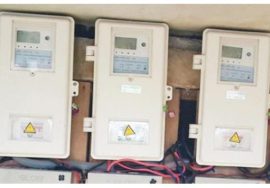
We have built an economy where millions of people must burn petrol or diesel to obtain electricity that should ordinarily be available through a dependable power system.
Petrol powers our vehicles.
But it also powers generators in homes, shops, offices, workshops, restaurants and small businesses.
Diesel keeps many factories, hospitals, hotels and larger facilities operating.
Think about the economic implications.
A manufacturer who should be concentrating on producing goods must also invest in generators, fuel storage, maintenance and private power infrastructure.
A small business owner must first solve an electricity problem before earning the first naira.
A household pays for electricity from the grid.
When electricity fails, it buys petrol to generate power.
The generator requires servicing and repairs.
Then that same household pays higher prices for goods and services because businesses have included their own energy costs in what they sell.
We have converted the failure of electricity infrastructure into a permanent operating cost for households and businesses.
And the figures are revealing.
According to the Nigerian Electricity Regulatory Commission, grid-connected power plants generated an average of approximately 4,102 megawatts in August 2026.
The Manufacturers Association of Nigeria reported that manufacturers spent approximately ₦1.34 trillion (US$1.01 billion) on alternative energy in 2025, compared with ₦1.11 trillion in 2024.
That is an increase of approximately 21%.
These figures cover alternative energy expenditure, including sources such as diesel and gas, not petrol alone.
Now think about what ₦1.34 trillion represents.
That is money businesses could otherwise have available for machinery, expansion, research, employee development, new products and employment.
And we have not counted what millions of households and smaller businesses spend generating their own electricity.
What troubles me is that we have normalised an extraordinarily expensive way of running an economy.
Every shop has to think about its generator
Every factory must consider backup power
Every household must make arrangements for when electricity disappears
And the resulting costs are quietly embedded in the prices of almost everything we consume.
Now suppose petrol falls to ₦500 tomorrow
Would our factories suddenly have reliable electricity?
Would households stop maintaining generators?
Would businesses stop investing in private electricity systems?
No.
Cheaper petrol would reduce part of the immediate burden, and that relief matters.
But the structural problem would remain.
Nigeria possesses substantial natural gas resources, solar potential and opportunities for decentralised electricity generation.
Our energy strategy should therefore extend beyond petrol pricing to dependable grid electricity, gas-powered generation, solar and battery systems, mini-grids and affordable mass transportation.
We should not only be asking how to reduce the price of each litre Nigerians buy.
We should also be asking how to reduce the number of litres Nigerians are forced to buy because our electricity and transportation infrastructure remain inadequate.
Imagine the economic effect if millions of generators operated far less frequently.
Lower household energy expenditure
Lower production costs
More competitive industries
Greater opportunities for investment and employment.
That is why Nigeria’s overdependence on petrol and diesel is not simply an energy problem.
It is a national productivity problem.
And government must be accountable for reducing it.
3. DANGOTE HAS CHANGED NIGERIA’S REFINING ECONOMICS. SO WHERE IS THE DOMESTIC REFINING ADVANTAGE?
For decades, Nigeria produced crude oil, exported it and imported large quantities of finished petroleum products.
We exported a raw material and paid to bring refined products back into the country.
That arrangement exposed us to international refining costs, ocean freight, marine insurance, import logistics and foreign exchange pressures.
Now Nigeria has the Dangote Refinery.
And I believe we must ask a serious question.
If we can now refine petrol domestically, what costs should disappear or reduce, and how much of that advantage should reach Nigerian consumers?
Consider the evidence.
Dangote’s refinery has a reported crude distillation capacity of 700,000 barrels daily.
According to the US Energy Information Administration, Nigeria’s seaborne petroleum product imports fell from almost 400,000 barrels daily in 2023 to less than 130,000 in the second quarter of 2026.
And in August 2026, according to NMDPRA, domestically refined petrol accounted for approximately 71% of Nigeria’s total petrol receipts, with 35.9 million litres supplied domestically each day against 14.6 million litres imported.
This is a major industrial achievement
But there is something even more important.
We already have evidence that locally refined petrol can be cheaper than imported petrol.
According to data from the Major Energies Marketers Association of Nigeria, on 7 September 2026:
Dangote’s petrol price at the refinery gantry was approximately ₦1,265 per litre.
The estimated import parity price was approximately ₦1,310.64 per litre.
That was a difference of about ₦46 per litre in favour of locally refined petrol.
By 17 September, the advantage had narrowed.
Dangote’s reported gantry price was ₦1,350, compared with estimated import parity prices of approximately ₦1,364 to ₦1,372, depending on the benchmark.
That represented an advantage of roughly ₦14 to ₦22 per litre.
These are dated refinery and import-cost comparisons, not retail pump-price savings.
But they demonstrate that domestic refining can create a measurable price advantage.
Now here is my concern.
Why is that advantage NOT MORE SUBSTANTIAL?
What determines its size?
And how much of it actually reaches the consumer?
We must be fair in answering these questions.
Crude oil is not free simply because it is produced in Nigeria.
It has an international economic value.
Refineries incur financing, operating, maintenance and capital recovery costs.
Dangote is a private commercial enterprise and should be able to earn a return on its investment.
Dangote’s reported gross refining margin of US$24.50 per barrel in the first half of 2026 is not the same as net profit, and that figure alone does not prove consumers are being overcharged.
However, it is considerably HIGHER than margins reported by several established international refineries in recent reporting periods, raising legitimate questions about what is driving such a substantial margin and whether Nigerian consumers are receiving a fair share of the benefits of domestic refining.
Although refining margins fluctuate with market conditions and reporting methods differ, such a significant margin deserves closer scrutiny, not automatic accusations or unquestioning acceptance.
But none of these facts eliminates government’s responsibility to ensure that the domestic petroleum market operates efficiently.
In July 2026, Dangote began pricing local fuel sales in dollars, citing difficulties obtaining sufficient crude under the naira-for-crude arrangement.
Reuters reported that the refinery needed approximately 13 to 15 crude cargoes monthly, while receiving about seven from NNPC at the time.
The shortfall had to be sourced internationally.
How do we expect to capture the full benefits of domestic refining when our major refinery still faces difficulties obtaining sufficient crude from a country that produces crude oil?
That is a national petroleum policy issue.
We should also recognise that settling crude transactions in naira does not automatically mean the crude is being sold cheaply. The benchmark price and commercial terms still matter.
And we must examine competition.
Dangote’s refinery deserves an environment that encourages efficient investment.
But consumers also deserve genuine competition, product quality and fair market access.
We must not replace excessive dependence on imported petrol with excessive DEPENDENCE ON A SINGLE DOMESTIC SUPPLIER.
Local refining should help Nigeria reduce avoidable import costs, conserve foreign exchange otherwise spent on finished product imports, improve supply security and retain more industrial activity domestically.
But those benefits depend on crude procurement, imported inputs, financing and how the supply chain operates.
So I want government and the relevant regulators to explain something clearly.
What does it genuinely cost to supply petrol through domestic refining compared with importing the same product?
Which costs have been eliminated?
Which costs remain?
Which costs are avoidable?
What commercial margins exist between the refinery and the filling station?
And how much of the domestic refining advantage ultimately reaches Nigerians?
Domestic refining is an industrial achievement. But the real national test is whether that achievement translates into lower avoidable costs, greater energy security and measurable economic benefits for citizens.
We should recognise the achievement.
But we must also demand the results.
4. WHAT WOULD ₦500 OR ₦300 PETROL REALLY MEAN?
This is another area where I believe Nigerians deserve more economic clarity.
I understand why people are demanding cheaper petrol.
Consider someone earning ₦70,000 monthly.
At ₦1,370 per litre, 50 litres costs ₦68,500
At ₦500, the same quantity costs ₦25,000
At ₦300, it costs ₦15,000.
For a household struggling with transportation, food, rent and electricity, those differences are enormous.
We should not dismiss the hardship simply because subsidy removal may have fiscal benefits.
But we must ask another question.
WHO PAYS THE DIFFERENCE?
Suppose the genuine economic cost of supplying petrol is ₦1,370 per litre.
This is an illustration. I am not claiming that ₦1,370 has been independently verified as Nigeria’s true supply cost.
At a government-controlled selling price of ₦500, the difference would be ₦870 per litre.
According to NMDPRA, Nigeria consumed approximately 41.5 million litres daily in August 2026.
Financing that difference at the same consumption level would cost approximately:
₦36.1 billion daily, or ₦13.2 trillion (US$9.9 billion) annually.
At ₦300 per litre, the difference becomes ₦1,070.
The annual cost would increase to approximately ₦16.2 trillion (US$12.2 billion).
These are hypothetical calculations, assuming unchanged consumption and supply costs. They are not estimates of Nigeria’s actual subsidy bill.
But they illustrate the magnitude of the fiscal decision.
A government can reduce what consumers pay without reducing what petrol actually costs to supply.
The difference may be paid directly from public revenue.
It may appear as a loss carried by a public enterprise.
Or government may transfer value through preferential crude pricing.
The cost or foregone public revenue still exists somewhere.
But here is a distinction I consider extremely important.
NOT EVERY REDUCTION IN PETROL PRICE REQUIRES A SUBSIDY.
Suppose improvements in domestic refining, competition, transportation, proper oversight and distribution eliminate ₦200 per litre in avoidable costs.
That reduction can reach consumers without government necessarily paying ₦200 per litre to anyone.
At Nigeria’s August consumption level, a genuine reduction of ₦200 per litre represents approximately ₦3 trillion annually in lower fuel expenditure, assuming the savings are fully passed on and consumption remains unchanged.
That is the difference between making petrol cheaper through efficiency and making it cheaper by transferring part of the bill to government.
And it is precisely why the questions about Dangote, crude supply and distribution efficiency are important.
Before telling Nigerians that cheaper petrol is fiscally impossible, government should be able to demonstrate that avoidable costs in the supply system are being addressed.
There is also the question of who benefits from subsidies.
Consider two hypothetical households.
One buys 300 litres of petrol monthly
The other buys just 10 litres for a small generator.
At a subsidy of ₦870 per litre, the first household receives a direct monthly benefit of ₦261,000.
The second receives ₦8,700.
The household consuming more petrol captures a much greater direct benefit.
Of course, poorer households can also benefit indirectly through lower transport fares and product prices.
But this is why we must examine whether blanket fuel subsidies, targeted assistance, better public transportation or reliable electricity would deliver greater benefits for the resources committed.
Subsidy policy is fundamentally about who pays the cost.
Energy efficiency is about how much of that cost can be eliminated.
And affordability is about whether citizens have the economic capacity to meet the costs that remain.
These are three different questions.
Nigeria must address all three.
THE REAL QUESTION WE MUST ANSWER
I am not arguing that Nigeria must sell petrol at Angola’s or Algeria’s price.
Neither am I arguing that Nigerians should accept whatever price is presented as a market price.
And I do not believe the answer lies entirely in either restoring or removing subsidies.
Nigeria must confront three major responsibilities.
First, reduce our forced dependence on petrol and diesel by providing reliable electricity, affordable energy alternatives and more efficient transportation.
Second, ensure that domestic refining produces measurable economic advantages through reliable crude supply, efficient logistics, transparent pricing and genuine competition.
Third, make energy more affordable while ensuring that any subsidy or other public support is transparent, financially defensible and beneficial to the people who need it.
These are not competing objectives.
They reinforce one another.
An efficient petroleum market can reduce avoidable costs.
Reliable electricity can reduce the amount of fuel Nigerians must consume.
And effective public policy can ensure that the economic benefits reach citizens.
A country can have abundant crude oil, major refineries, substantial petroleum exports and profitable energy companies, yet its citizens can still struggle to afford electricity, transportation and basic necessities.
That is why we must stop confusing the performance of the petroleum sector with the economic well-being of Nigerians.
The real measure of our petroleum wealth is not simply how much oil we produce, how much petrol we refine or how much revenue government collects.
It is how much of that wealth translates into lower avoidable costs, greater productivity, affordable energy and improved living standards for Nigerians.
We should not merely be debating how to make petrol cheaper.
We should be asking why energy is so expensive to use in Nigeria, what domestic refining is genuinely saving us, and what government is doing to ensure that our petroleum wealth produces measurable benefits for citizens.
That is the conversation I believe we should be having.
– Abiodun Adetula