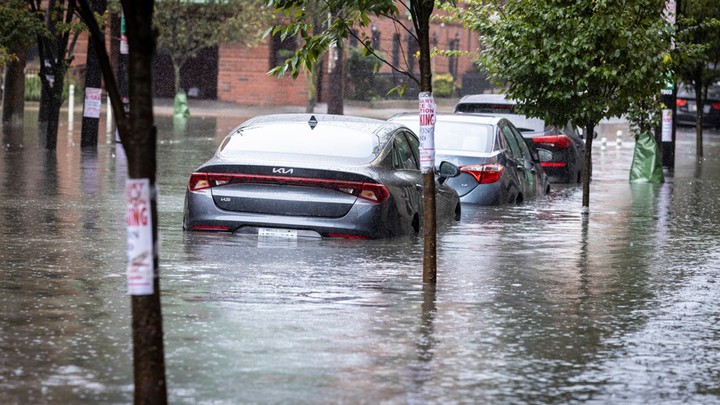
New York City Declares State of Emergency Amidst Widespread Flooding and Extreme Rainfall
On Friday, September 29, 2023, a state of emergency was declared in New York City and surrounding areas as the northeastern region of the United States experienced widespread flooding due to extreme rainfall. Approximately 23 million people were under flood watches across parts of New York, New Jersey, and Connecticut.
The situation was dire, with up to 13cm (five inches) of rain falling overnight, and an additional 18cm (seven inches) expected throughout the day, as stated by New York Governor Kathy Hochul. She emphasized the gravity of the situation, calling it a “dangerous, life-threatening storm” and urged New Yorkers to recognize the lethal nature of the floodwaters.
The heavy rain had severe consequences, shutting down significant portions of New York City’s subway system, inundating streets and highways, and even causing the closure of one of LaGuardia Airport’s terminals in Queens. Public transportation was severely disrupted, with virtually every subway line experiencing suspensions, reroutes, or delays. Two out of the three Metro-North Railroad lines were also suspended.
Flash flood warnings were in effect for areas including Long Island, Brooklyn, Queens, Manhattan, and New Jersey, adding to the crisis. Disturbing footage on social media depicted water pouring into underground stations and streets resembling small lakes.
Meteorologist Zack Taylor from the National Weather Service cautioned against traveling in these perilous conditions and encouraged people to wait until the weather clears.
The chaos during rush hour led to some drivers abandoning their vehicles as traffic came to a complete halt on FDR Drive, a major road along Manhattan’s east side. Reports indicated that traffic hadn’t moved on the road for hours.
Governor Hochul acknowledged that extreme weather events like this were becoming more common in the New York region due to the effects of climate change. As the planet warms, storms are forming in a hotter atmosphere, leading to an increase in the frequency of extreme rainfall, according to scientists.
This alarming situation served as a stark reminder of the challenges posed by climate change and the need for proactive measures to mitigate its impact and adapt to the changing climate patterns.